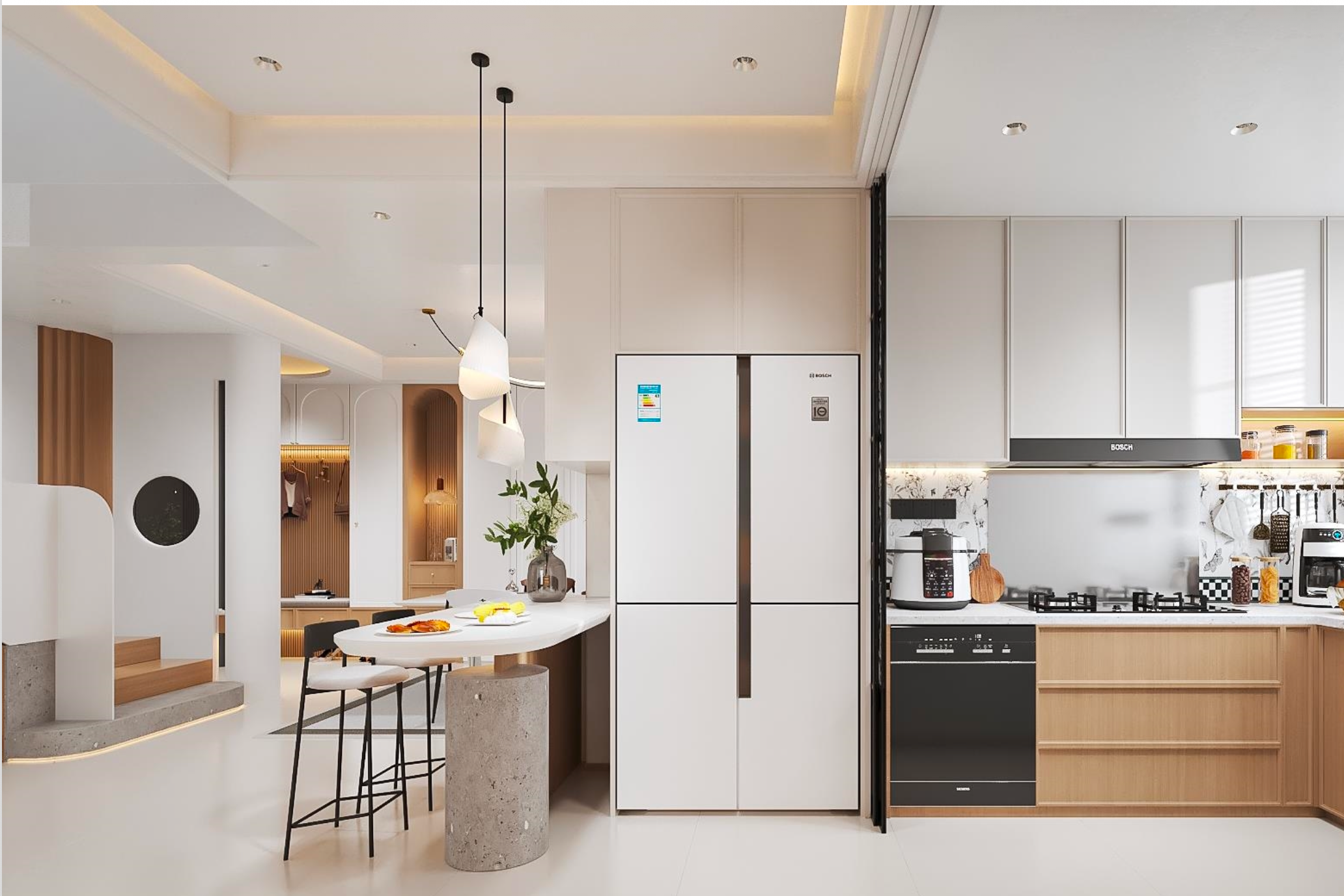
Waterproof Like Aluminium.
Stronger Inside. Warmer for Real Homes.
Aluminium-clad exterior. Solid ENF plywood core — not hollow. PUR-sealed edges. A waterproof kitchen cabinet built for Singapore humidity, with residential finishes that actually integrate with your home.
The Real Concern Behind the Search
When homeowners search for aluminium, stainless steel, or waterproof kitchen cabinets in Singapore, the underlying worry is almost always the same:
- Cabinets warping or swelling near the sink
- Wood absorbing moisture in the wet kitchen zone
- Mould building up inside cabinet panels over the years
- Hinges and handles loosening from a weak substrate
- Wanting waterproofing — but not wanting a cold, metallic-looking kitchen
There is a more considered way to solve the humidity problem — without sacrificing structural integrity or finish quality.
What Homeowners Often Discover Later
Hollow aluminium kitchen cabinets are a common choice for waterproofing. There are a few practical considerations worth understanding before committing.
Thin Panel Construction
Many hollow aluminium systems use thin-walled profiles that keep weight low — but also limit how much load the cabinet body can comfortably bear over daily use.
Hollow Core Inside
The internal structure of aluminium honeycomb panels is largely empty. This is by design for weight savings, but it leaves very little solid material for screws or hardware to grip into.
Screw-Holding Over Time
Hinges, handles, drawer runners and shelf supports all rely on a firm substrate. In hollow cores, repeated use and door weight can cause fixings to loosen gradually — particularly with heavier hardware systems.
Edge & Joint Stability
Aluminium extrusion systems join at corners and edges mechanically. Over time, thermal movement and daily use can affect how those joints sit — something worth considering for a kitchen built to last.
Limited Finish Range
Most hollow aluminium systems come in a narrow range of metallic profiles. Functional in commercial settings, but harder to integrate with the warmer, more varied aesthetic most Singapore homes call for.
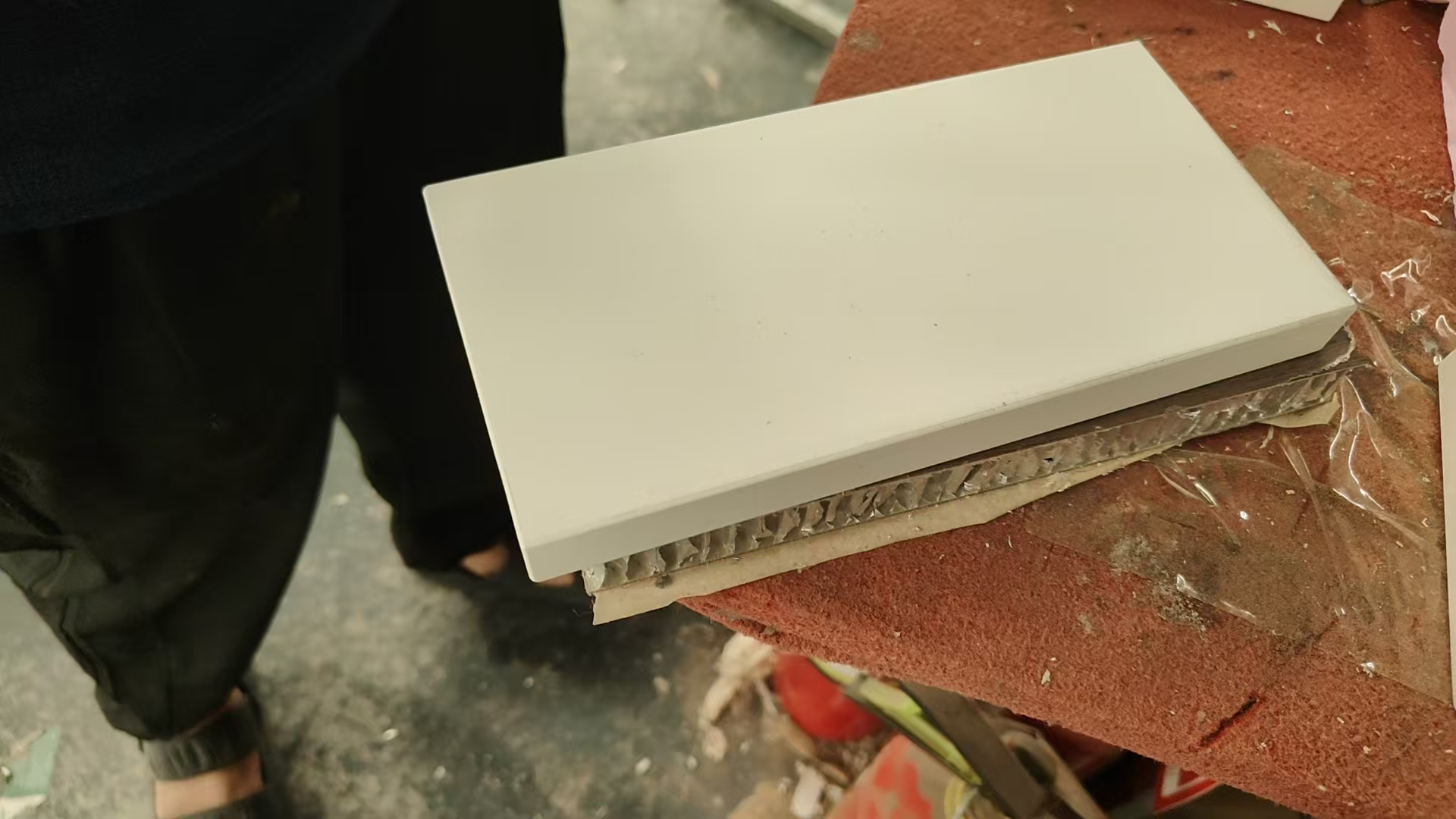
Why Hollow Aluminium Honeycomb Has Structural Limits
Hollow aluminium and aluminium honeycomb cabinets address surface moisture effectively. But the internal structure introduces practical limitations that matter over the life of a kitchen.
As the cross-section shows, the core is largely empty. This has real consequences for daily use:
- Screw-holding capacity — solid substrate is needed for hinges, handles and shelf fixings to stay firm over time; hollow cores offer limited grip
- Hardware system compatibility — quality hinge systems like Blum and Hettich are engineered for solid boards; performance in hollow cores depends heavily on how fixings are installed
- Finish and aesthetic range — most hollow aluminium systems are available in a narrow set of metallic or plain profiles, which can be difficult to integrate with residential interiors
- Edge and joint behaviour — aluminium extrusion joints rely on mechanical assembly; long-term performance at corners and edges depends on installation quality and environmental conditions
Worth considering: Waterproofing is not only about the surface. A cabinet with a structurally limited core may still present maintenance challenges over time — regardless of how its exterior performs.
The Alu-Clad Hybrid: Solid Core, Waterproof Shell
For wet zones — sink base cabinets, under-counter areas, wet kitchen perimeters — CASAWAVE uses an Alu-Clad Hybrid construction that addresses both waterproofing and structural performance at the same time.
The material is engineered from the inside out:
-
ENF-grade solid multi-layer plywood core Zero-formaldehyde (ENF / F4★) certified structural plywood — dense, stable, and strong enough for heavy door loads and quality hinge systems. Screws hold firmly, the way they should in a well-built kitchen.
-
Aluminium-clad exterior — full surface wrap The plywood core is fully wrapped in a thickened aluminium layer, blocking surface moisture and providing a durable, cleanable exterior. Waterproof performance without the hollow core.
-
HOMAG PUR edge banding (German technology) Every exposed edge is sealed with polyurethane reactive (PUR) adhesive — closing off the entry points where moisture typically enters cabinet panels over time.
-
Local measurement & installation On-site measurement by our own team, fabricated to your kitchen's exact dimensions. Not a flat-pack system.
Waterproof like aluminium. Structurally stronger than hollow aluminium. Warmer and more residential in finish.
Unlike hollow aluminium systems — which are typically limited to metallic profiles and a narrow colour range — the Alu-Clad Hybrid supports the full range of CASAWAVE door panel finishes. Warm woodgrains, matte lacquers, textured surfaces and curated designer colours. The waterproof zones in your kitchen can match the rest of the cabinetry, rather than standing apart as a visible compromise.
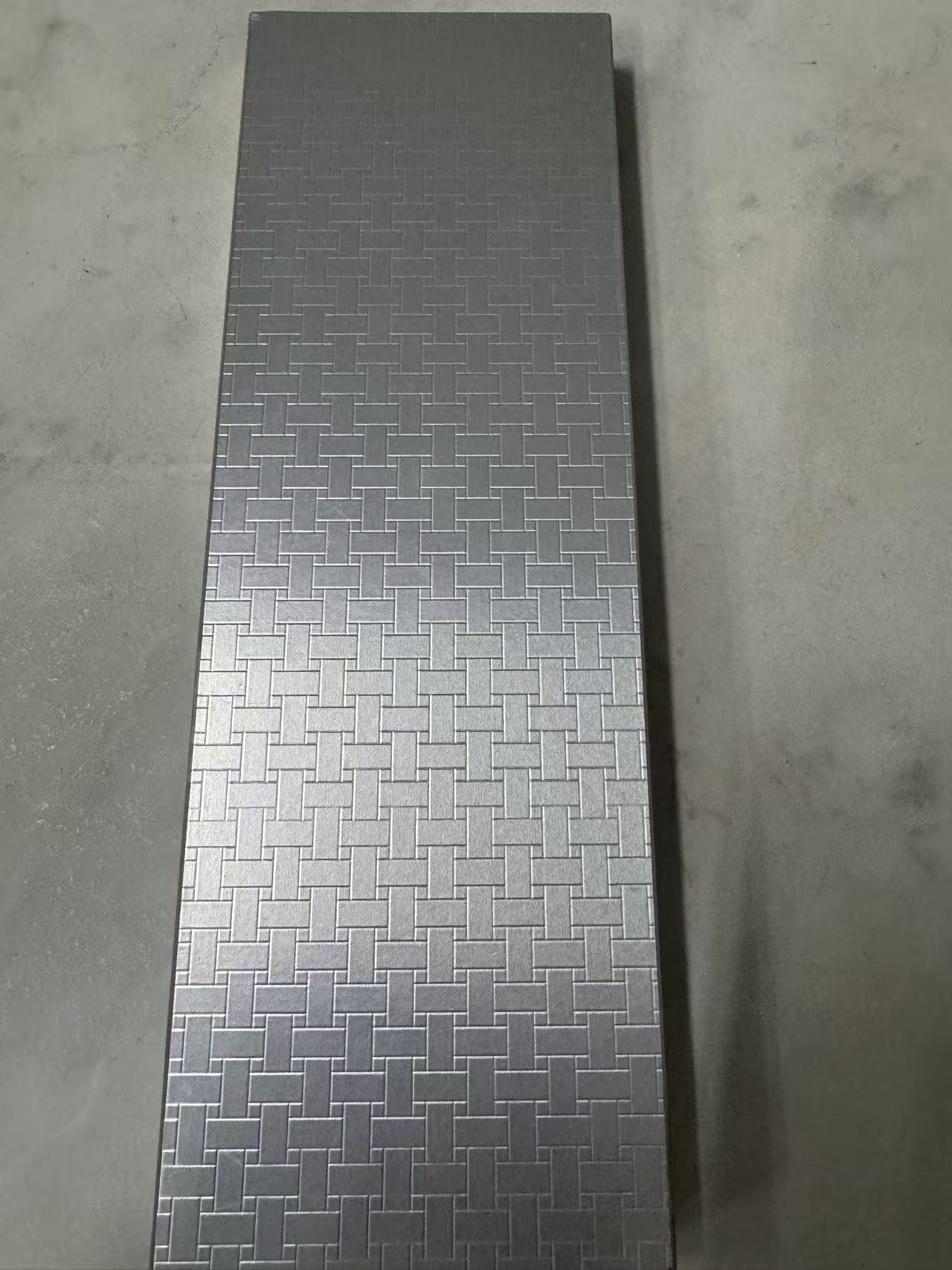
Alu-Clad Hybrid vs Hollow Aluminium Honeycomb
A practical comparison of the two most common waterproof cabinet solutions sold in Singapore.
| Feature | Hollow Aluminium Honeycomb |
CASAWAVE Alu-Clad Hybrid |
|---|---|---|
| Screw-holding strength | Weak — hollow core strips quickly | Strong — solid plywood grips screws firmly |
| Hinge & hardware stability | Risk of loosening over time | Stable — suitable for Blum/Hettich systems |
| Waterproof protection | Surface only — edges may absorb moisture | Full shell + PUR-sealed edges |
| Sink base & wet zone use | Marginal for prolonged exposure | Designed for wet kitchen zones |
| Surface & finish options | Limited — typically metallic profiles only | Hundreds of finishes — warm woods to matte lacquers |
| Aesthetic integration | Commercial / industrial look | Residential — matches living room cabinetry |
| HDB / condo suitability | Functional but aesthetically limited | Designed for Singapore residential kitchens |
| Formaldehyde certification | Varies by brand — often unspecified | ENF / F4★ certified — zero-formaldehyde |
Best For
The Alu-Clad Hybrid is particularly suited to situations where humidity control and structural durability both matter.
Sink Base Cabinets
The area directly under the sink — the most moisture-exposed zone in any kitchen. The sealed cladding and PUR edges handle sustained humidity without warping or swelling.
Wet Kitchen Zones
Open cooking areas with direct steam and splash exposure. The aluminium exterior wipes clean and resists moisture penetration even with daily heavy cooking.
Singapore Humid Homes
Singapore's year-round humidity (75–85% RH) accelerates cabinet wear. The Alu-Clad construction is specifically engineered for tropical climate performance.
HDB & Condo Kitchens
Homeowners who want a genuinely waterproof kitchen — but prefer warm, residential finishes over the cold commercial aesthetic of full-metal systems.
For our full kitchen storage and layout system, see the Kitchen Storage System Singapore page. Material certifications are detailed on our Eco-Friendly Boards and Materials Technology pages.
Compare the Two Options In Person
At our Woodlands showroom you can hold the Alu-Clad board, check the edge quality, and compare residential finish options alongside hollow aluminium samples — before making any decision.
Frequently Asked Questions
Questions we hear from homeowners searching for aluminium, stainless steel, or waterproof kitchen cabinets in Singapore.
Outside: fully wrapped in an aluminium layer, giving you waterproof surface performance comparable to full-aluminium systems.
Inside: solid ENF-grade multi-layer plywood core — dense, stable, and strong enough for heavy doors and quality hinge hardware. Screws grip firmly. Hollow cores cannot offer the same.
The result is a waterproof kitchen cabinet that handles Singapore humidity, holds its hardware over time, and is available in a wide range of residential finishes — not just metallic profiles.
Structure: Hollow aluminium honeycomb offers limited substrate for screws and fixings. Over time — particularly with heavier cabinet doors and quality hinge systems — this can lead to loosening. Our solid plywood core holds hardware firmly over the long term.
Edge integrity: PUR-sealed edges close every potential moisture entry point. Aluminium extrusion joints at corners and edges rely on mechanical assembly, which can shift over years of thermal movement and daily use.
Finish range: Hollow aluminium systems typically come in metallic profiles and a limited colour selection. The Alu-Clad Hybrid supports warm woodgrains, matte lacquers, textured surfaces and a wide range of residential finishes — so waterproof cabinet zones integrate naturally with the rest of your kitchen.
Compare the Options — Before You Decide
Visit the CASAWAVE showroom in Woodlands to compare the Alu-Clad board and hollow aluminium samples side by side. See the core density. Check the edge quality. Browse woodgrain, matte and textured finish options. No commitment needed.