When evaluating custom furniture, most homeowners focus on the board material—and rightly so. However, there is another critical factor that often goes unnoticed: edge banding. The edges of cabinet panels are the most vulnerable points where moisture can penetrate, causing swelling, delamination, and premature deterioration.
In Singapore's tropical climate, where humidity levels regularly exceed 80%, the quality of edge banding becomes even more important. A cabinet made from premium boards can still fail if the edges are poorly sealed. Conversely, proper edge banding can significantly extend the lifespan of your furniture and maintain its appearance for years.
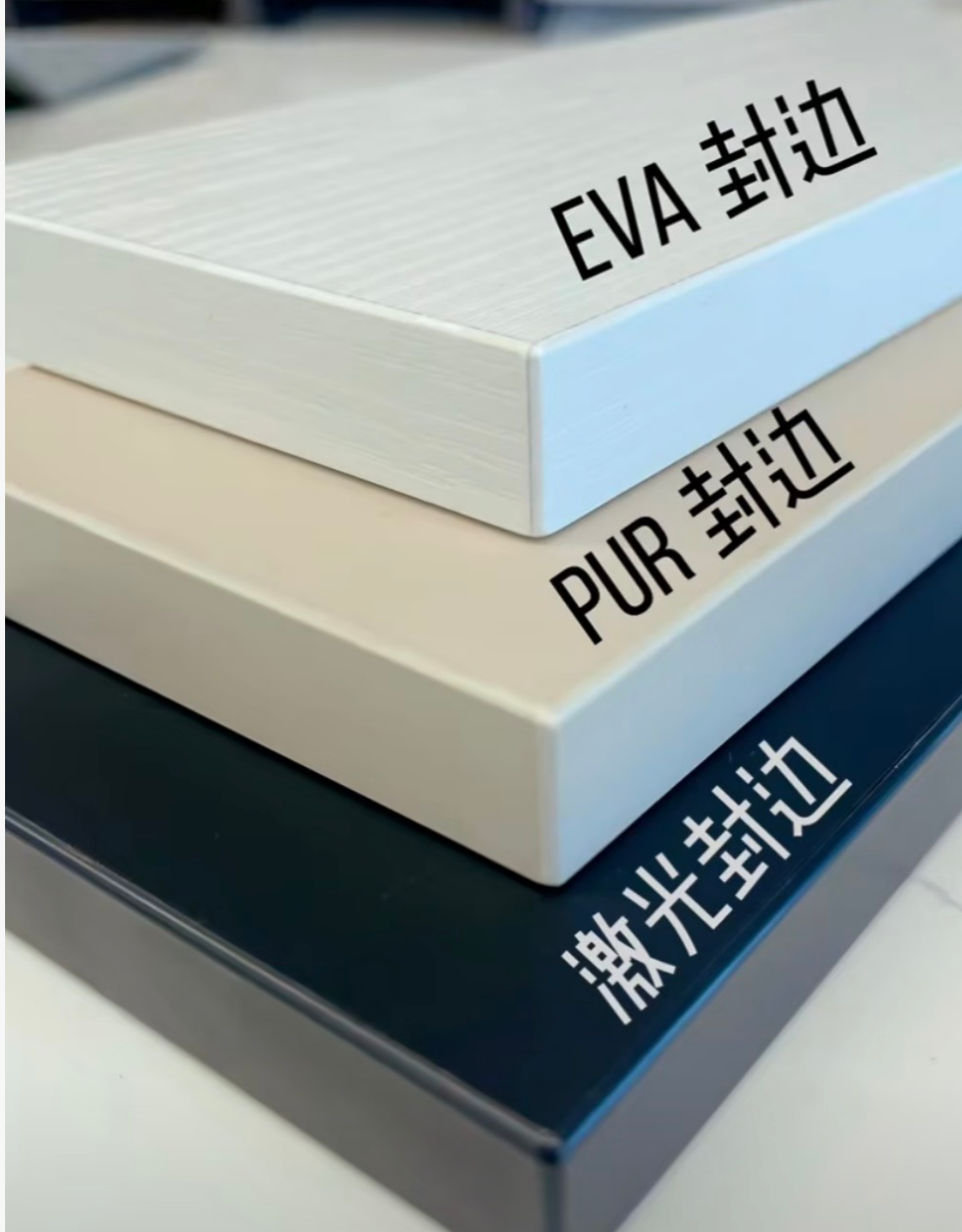
This guide explains the differences between manual edge banding (commonly used by local carpenters), PUR edge banding, and laser edge banding—helping you understand why CASAWAVE uses advanced sealing methods as standard for all custom furniture projects.
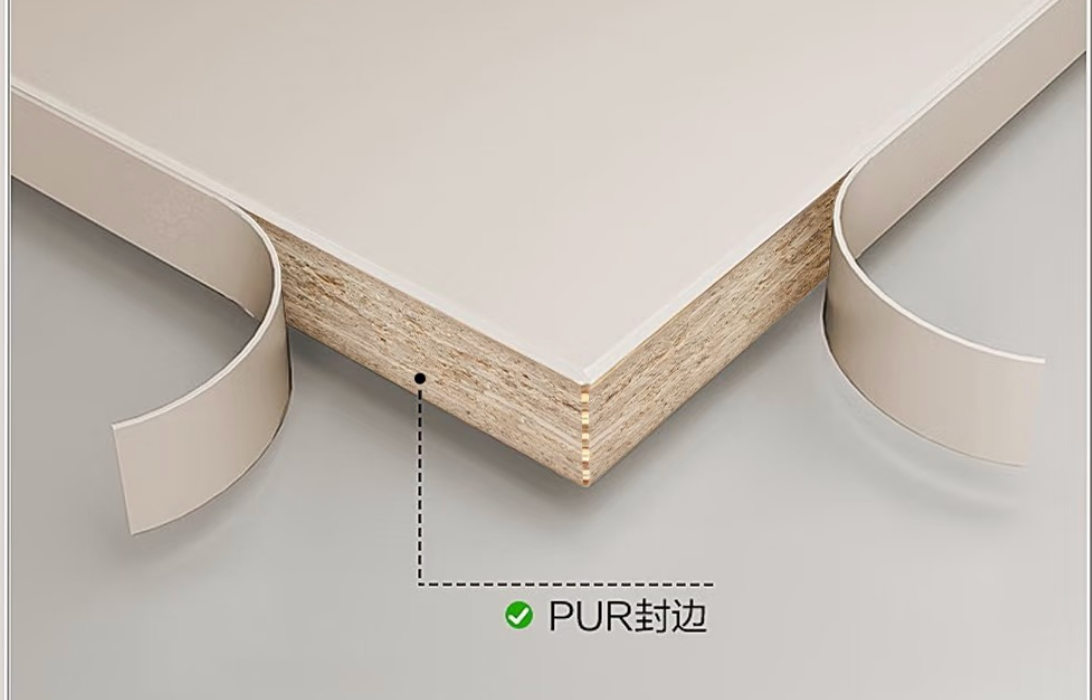
Edge banding is the process of applying a thin strip of material—typically PVC, ABS, or melamine—to the exposed edges of engineered wood panels. This serves several critical functions:
The core of particleboard and MDF is highly absorbent. Without proper edge sealing, moisture from humid air, splashes, or spills can penetrate the board, causing it to swell and lose structural integrity.
Exposed edges are prone to chipping and damage from daily use. Edge banding creates a protective barrier that absorbs impacts and prevents the board core from crumbling.
Properly applied edge banding creates a seamless, finished appearance. The edge strip can match or complement the panel surface, contributing to the overall design quality.
Edge banding helps seal the board core, reducing the emission of any residual formaldehyde from the panel edges—an additional benefit for indoor air quality.
Manual edge banding refers to the traditional method where edge strips are applied by hand using contact adhesive (commonly called "white glue" or EVA-based adhesives). This is the most common approach used by local carpenters and smaller furniture workshops in Singapore.
Traditional hand-applied method
EVA-based adhesives have a relatively low heat resistance (typically 60–80°C) and can soften in Singapore's warm, humid conditions. Over time, this can cause the edge band to lift or peel—particularly in kitchens near cooktops, or in poorly ventilated spaces where humidity accumulates.
PUR (Polyurethane Reactive) edge banding uses a specialised adhesive that chemically bonds with both the edge strip and the panel substrate. Unlike EVA adhesives that simply dry and harden, PUR adhesive undergoes a chemical reaction with ambient moisture, creating a permanent, cross-linked bond.
Industrial-grade moisture-cured bonding
Laser edge banding represents the most advanced sealing technology currently available. Instead of applying separate adhesive, the edge strip itself contains a functional layer that is activated by laser energy during application. This creates a seamless, virtually invisible joint between the edge band and panel surface.
Zero-joint technology for seamless finish
Traditional edge banding always leaves a visible line where the adhesive meets the panel surface. This line can darken over time, collect dust, and potentially allow moisture ingress. Laser edge banding eliminates this joint entirely, creating a monolithic appearance where the edge and surface appear as one continuous material.
The following table summarises the key differences between the three edge banding methods:
| Factor | Manual (EVA) | PUR | Laser |
|---|---|---|---|
| Bond Strength | Moderate | High | Very High |
| Heat Resistance | 60–80°C | Up to 150°C | Excellent |
| Moisture Resistance | Limited | Excellent | Excellent |
| Visible Glue Line | Yes | Minimal | None |
| Risk of Edge Lifting | Higher | Low | Very Low |
| Suitable for Wet Areas | Not ideal | Yes | Yes |
| Equipment Required | Basic | Industrial | Advanced |
| Typical Application | On-site carpentry | Factory production | Premium factory |
Singapore's tropical climate creates specific challenges for furniture durability. Understanding these factors helps explain why advanced edge banding is particularly important here:
Average humidity of 80–90% means constant moisture exposure. Poorly sealed edges absorb this moisture continuously.
Steam, splashes, and condensation in wet areas accelerate edge failure. These spaces need superior moisture protection.
Resale flats and older condos often have less effective waterproofing. Furniture in these homes faces higher moisture stress.
When edge banding fails, the damage is often irreversible. Swollen boards cannot be restored to their original state—the affected panels must be replaced entirely. This makes proper edge sealing a critical investment in furniture longevity, not just an aesthetic consideration.
CASAWAVE specifies PUR and laser edge banding for all custom furniture projects—not as an upgrade option, but as our standard specification. Here is why:
We use ENF and F4 grade boards from brands like FUREN and EGGER. It makes no sense to invest in premium panels and then compromise on edge sealing. Advanced edge banding ensures the entire cabinet system performs to the same standard.
Edge lifting and moisture damage are among the most common furniture complaints in Singapore. By using PUR and laser edge banding, we significantly reduce these issues—resulting in better customer satisfaction and fewer service calls.
Custom furniture is a long-term investment. Our clients expect their wardrobes and kitchen cabinets to look and function well for 10–15 years or more. Advanced edge banding helps deliver on this expectation.
PUR and laser edge banding require industrial equipment and controlled conditions. This means consistent, repeatable quality—unlike manual application where results depend on individual skill and site conditions.
While all furniture benefits from quality edge banding, certain applications are particularly critical:
Base cabinets near sinks, dishwashers, and cooktops face constant exposure to water, steam, and heat. PUR or laser edge banding is essential for these high-stress locations.
Vanity units, laundry cabinets, and any furniture near water sources require superior edge sealing. These are the first places where manual edge banding typically fails.
While not directly exposed to water, wardrobes in Singapore can accumulate humidity—especially in bedrooms without air conditioning. Quality edge banding prevents gradual moisture absorption.
Resale HDB flats and older condominiums often have higher ambient humidity due to aging waterproofing. Furniture in these homes benefits significantly from advanced edge sealing.
PUR edge banding provides excellent water resistance—significantly better than EVA-based manual edge banding. The cured PUR adhesive does not soften when exposed to water and maintains its bond strength in humid conditions. While no edge banding is completely "waterproof" (prolonged submersion will eventually affect any material), PUR-sealed edges can handle normal kitchen and bathroom exposure without issues.
Laser edge banding offers the best aesthetic result—a truly seamless appearance with no visible glue line. Whether it is "worth it" depends on your priorities. For visible areas like kitchen fronts and living room feature walls, the premium appearance can be valuable. For internal cabinet components or less visible areas, PUR edge banding provides excellent performance at a lower cost. CASAWAVE can advise on the most appropriate specification for different parts of your project.
Absolutely. Edge banding quality directly impacts how long your cabinets will last. Poorly sealed edges allow moisture to penetrate the board core, causing swelling, delamination, and structural weakness. In Singapore's humid climate, this process can begin within 2–3 years with manual edge banding, while properly applied PUR or laser edge banding can protect cabinets for 10–15 years or more. The edge sealing method is one of the most important factors in furniture durability.
Talk to CASAWAVE on WhatsApp to understand how our material and construction specifications work together to deliver durable, beautiful custom furniture.
WhatsApp Us for Consultation